Welcome to The Correspondent
Foreign correspondence should still require a passport.
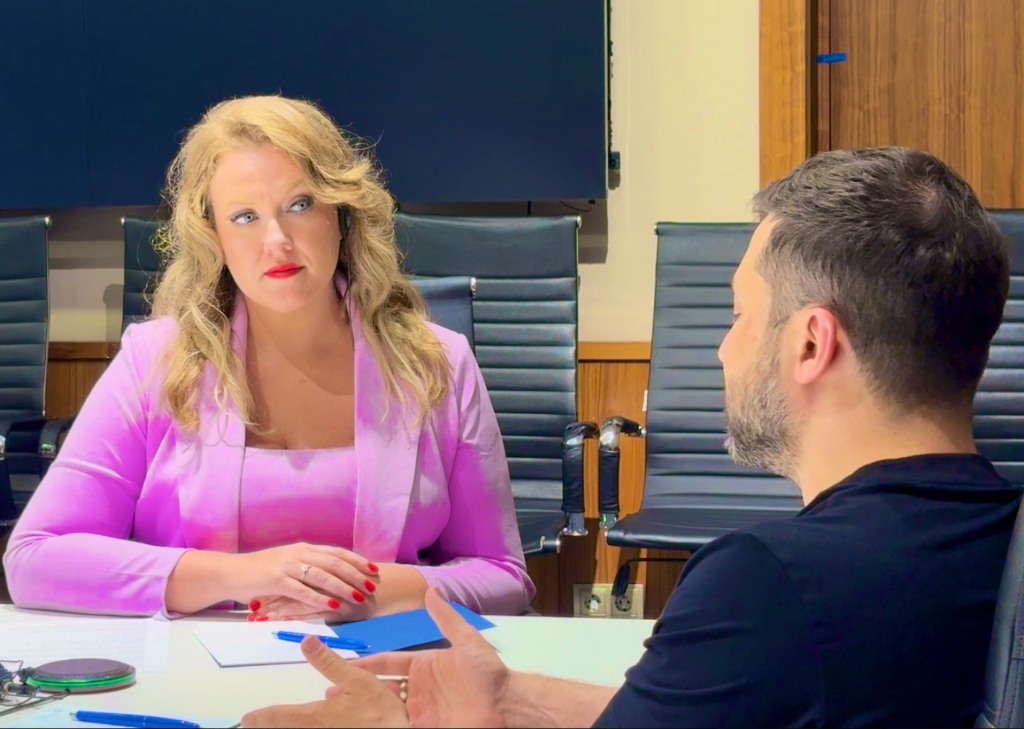
After 12 years in corporate media and four years of journalism school, I left the New York Post last month to create The Correspondent, which will officially launch one week from today.
I had incredible opportunities at The Post, building sources across Washington and around the world — reporting everywhere from Greenland and Taiwan to Ukraine and Gaza. But I wanted something more.
The Correspondent with Caitlin Doornbos is a reader-supported publication. Support its work with a free or paid subscription.
More voice, more insight and more connection with the people reading my work. And even more travel — because there's only so much insight journalists can provide from the comfort of their newsrooms, and corporate media just isn't paying to send its reporters to the scene like it once did.
I never thought I'd leave the structure of a corporate news environment, but it's become increasingly clear to me that independent journalism is the future of my beloved business.
Throughout my career, I'd often advise people who lamented a loss of trust in "the media" to find individual journalists they trusted instead of merely following a masthead. Pay attention to who actually knows the subject they cover, who has real sources, who gets things right — and who is honest enough to tell you when they don't know something.
So when independent journalism began to take off, it made perfect sense to me. Suddenly, journalists had the freedom to pursue stories that might never survive the bureaucracy, economics or competing priorities of a traditional newsroom, while readers could choose exactly whose reporting they wanted to support.
But that rise also came with an avalanche of new writers and influencers labeling themselves independent journalists, often without the ethics, clarity, deep sourcing and judgment that are built over years of actually doing this job.
In a world where anyone with a computer can start a Substack, how do you know whom to trust?
For all the problems with corporate media — and there are plenty — traditional newsrooms are built around some foundational principles that exist for a reason. Reporters are expected to develop real sources, verify what they're told, seek out the other side, distinguish what they know from what they think, protect confidential sources and correct the record.
There are editors asking uncomfortable questions and lawyers demanding you prove what you say. Those guardrails can sometimes be frustrating, but the best of them make journalism better.
I don't want to leave those standards behind. I want to take them with me.
And I want to take them on the road.
Because that's the other part of The Correspondent.
Somewhere along the way, foreign policy reporting became disconnected from actually being, well, "foreign." Newsrooms have fewer bureaus, smaller travel budgets and less appetite for putting a reporter on a plane for a story worth telling.
I want to bring that back.
That, to me, is another place where independent journalism can borrow something valuable from the best of traditional journalism rather than simply rejecting it.
The Correspondent is an attempt to connect these worlds: combining the sourcing, rigor and ethics I spent my career learning in classrooms and professional newsrooms with the freedom, personality and direct relationship with readers that independent journalism offers.
I don't expect you to trust this publication because it has a nice logo, because I worked for a major newspaper or because I now call myself an independent journalist.
I want to earn that trust the old-fashioned way: by doing the reporting.
So when major international news breaks, my promise is pretty simple: I'll call the sources. I'll ask the uncomfortable questions. I'll tell you what I know, what I don't and what I think it all means.
And whenever I can, I'll get on the plane.
After all, somebody has to be The Correspondent.
See you on Sept. 8.
Reader-supported reporting. Subscribe to keep the dispatches coming.
Become a subscriber Or join the free email list →