
Iran thinks time is on its side. It may be Trump's secret weapon
The Islamic Republic thinks it can outlast Trump. But Washington may have the advantage in a war of attrition.
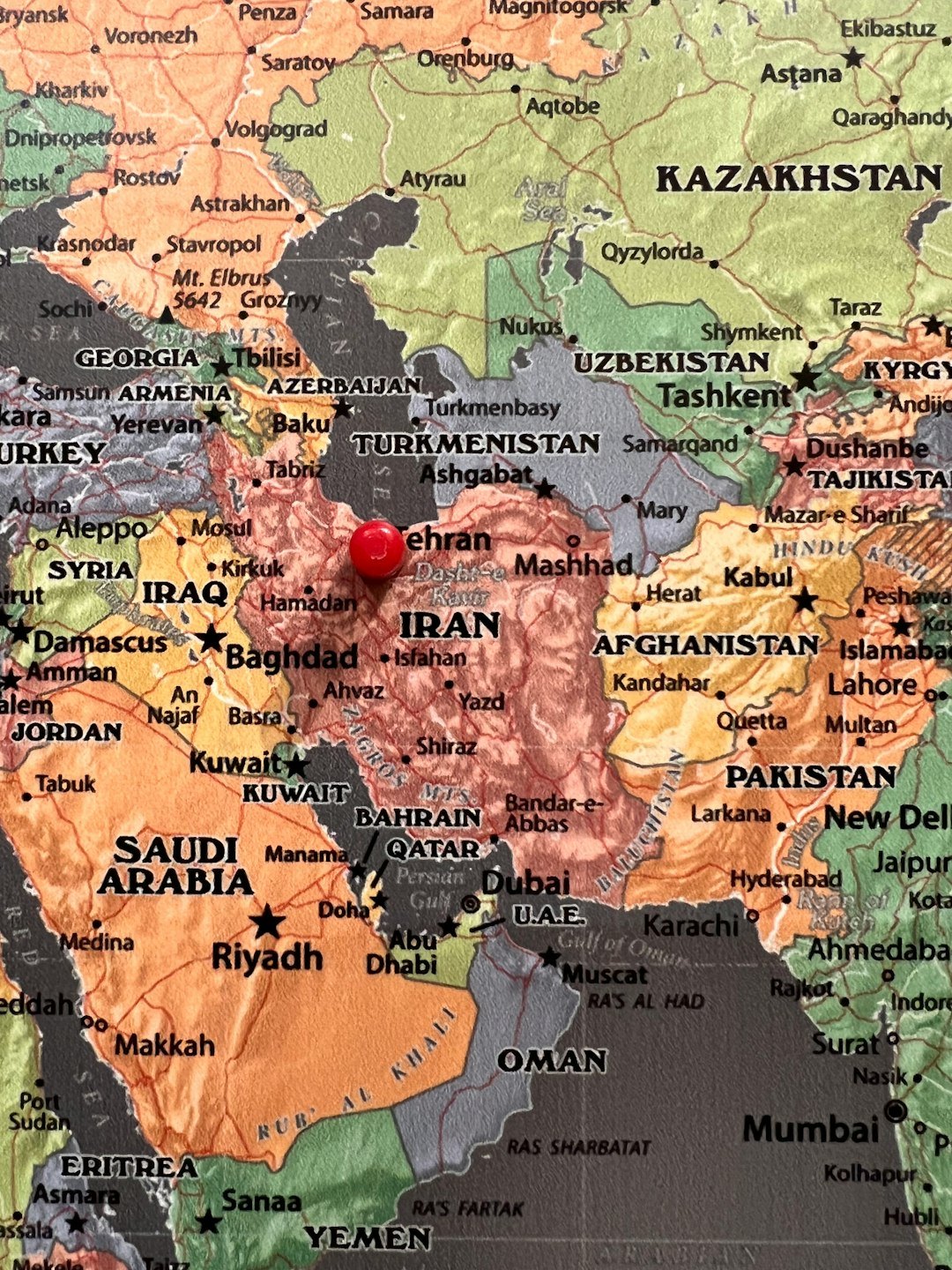
Iran may think it has found the perfect weapon against President Trump: time.
Tehran can keep talking about diplomacy, drag out negotiations, launch limited attacks and wait for America to get tired of another Middle East war.
But there’s a problem with that strategy.
Time may actually be working against Iran.
As Trump’s blockade and economic pressure continue to choke the Islamic Republic, the longer the standoff lasts, the more damage Washington can inflict on a regime now struggling to maintain its grip on the region.
“I would say this is a militarized form of containment,” Behnam Ben Taleblu, an Iran expert at the Foundation for Defense of Democracies, said on The Correspondent podcast.
The US is now betting that sustained pressure will eventually push Tehran to blink.
Iran, meanwhile, is betting the opposite: that Republicans will lose the November midterms and Trump will be forced to turn around and go home, tail between his legs.
“The desire to put America in a bind” and “run the clock” on the Trump presidency are central elements of Tehran’s strategy, according to Taleblu.
That sets up a dangerous waiting game. Who can endure the pressure longer?
Iran has played this game before
Tehran has spent decades learning how to survive sanctions, international isolation and military pressure.
Its strategy has often been to absorb the punishment, make limited countermoves and wait for the political winds in Washington to change.
The Trump presidency, however, presents a different problem for Iran.
Trump has shown a willingness to use economic and military pressure in ways previous presidents were not, Taleblu said. And unlike a single airstrike, economic pressure can become more powerful with time.
Iranian oil exports, for example, plunged during the earlier stages of the blockade, falling from roughly 2.1 million barrels a day to just 64,000 barrels a day in May, according to Taleblu.
Only four ships made it through the US blockade that month.
Now, with the blockade restored, Iran has been forced to look for other ways to move petroleum products. The longer that continues, the harder it becomes for Tehran to simply wait things out.
But Iran can hit back
That doesn’t mean the strategy is risk-free for Washington.
In fact, the greater the economic pressure becomes, the greater the incentive for Iran to make the region hurt.
Iran has already demonstrated its willingness to attack US forces, threaten shipping and target the infrastructure of America’s Gulf partners.
Iran-backed Houthis have also attacked Saudi Arabia, while Tehran has increasingly shown a willingness to threaten vessels in and around the Strait of Hormuz.
That is where the waiting game gets dangerous.
Iran could decide that if it can’t beat the blockade, it has to make the cost of maintaining it unbearable.
Taleblu warned that the US should prepare for precisely that possibility.
“I think what we need to prepare for militarily is sanction success, not failure,” he said.
The warning is based partly on what happened after Washington dramatically tightened sanctions on Iran in 2019.
Rather than simply capitulating, Tehran responded with attacks by Iranian-backed militias against US positions in Iraq, as well as attacks on shipping, drones and Arab oil infrastructure.
And of course, history could always repeat itself.
“I see the Islamic Republic looking to widen the war,” Taleblu said. “Despite them being down, they are not out.”
So who benefits from waiting?
Iran needs time to survive. But Trump also needs time for the pressure campaign to work.
The US has the advantage of being able to keep squeezing Iran economically while maintaining military pressure around the Gulf.
Iran has the advantage of being able to use proxies, missiles, drones and attacks on shipping to raise the cost of that pressure.
Neither side can know exactly when the other will crack. But no clock is neutral.
“The problem with the 24/7 ... news cycle” is that it encourages people to judge a war based on snapshots rather than watching how strategies work over months, Taleblu argued — tapping into a key reason The Correspondent was launched.
The latest diplomatic statements from Tehran doesn’t necessarily mean the regime wants peace. The latest missile attacks don’t necessarily mean war is about to explode.
Both can be part of the same strategy: buy time. And that may be the biggest gamble Iran is making.
Tehran believes America will eventually decide the conflict isn’t worth the cost.
Trump appears to be betting that Iran will eventually decide it can’t afford to keep fighting.
For now, both sides are waiting.
But as the blockade tightens and Iran’s economic options shrink, time may be turning from Tehran’s weapon into Trump’s.
“Time is a weapon when it comes to the blockade,” Taleblu said.
Reader-supported reporting. Subscribe to keep the dispatches coming.
Become a subscriber Or join the free email list →