
The White House tried to put me in my place. I was already in a bomb shelter.
Trump’s communications team came for me while I sheltered from Russian attacks in Kyiv. Its defense of Putin gave me my first laugh of the night.
Last night was hands-down the toughest I’ve spent in Kyiv.
Missile alerts every hour on the hour; wall-shaking, window-rattling booms outside; the eerie, grating sound of jet-powered drones circling overhead, searching for a target.
Meanwhile, the White House picked a public fight with me on the internet. Ah, to be an American reporter in Ukraine in 2026.
Earlier that day, President Trump’s special envoy Steve Witkoff had gushed about Russian dictator Vladimir Putin upon the release of US citizen Stephen Hubbard, who was wrongfully imprisoned after being captured in Ukraine at the start of the full-scale war.
“He is a 75-year-old-man and you talk so much about my president, President Trump, being a humanitarian — you are a humanitarian also, sir, and I salute that.”
I’m sorry, the man slaughtering thousands of Ukrainian civilians is a “humanitarian?”
Beyond the audacity of the claim, I focused in a post to X on the missed opportunity to use Hubbard’s release as a win for the president — who increasingly needs one as the weeks count down to the midterm elections.
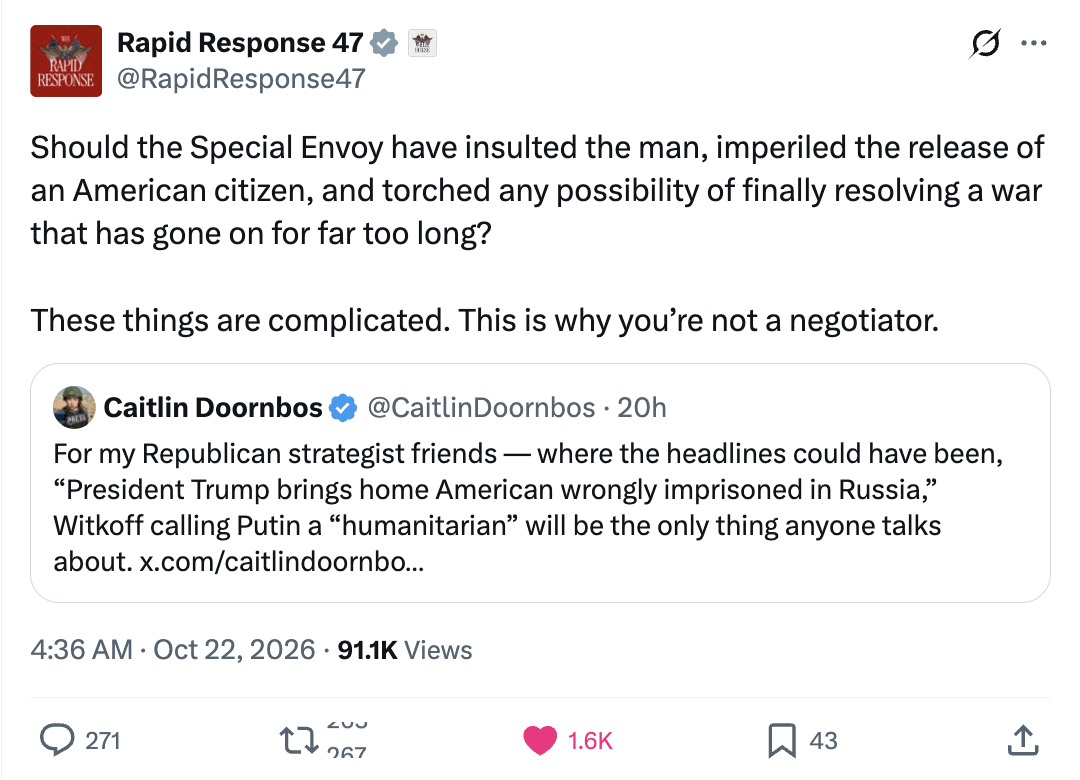
“For my Republican strategist friends — where the headlines could have been, ‘President Trump brings home American wrongly imprisoned in Russia,’ Witkoff calling Putin a ‘humanitarian’ will be the only thing anyone talks about,” I wrote, musing from the food court of a Kyiv mall.
I thought it was standard political analysis. But apparently it hurt the White House’s feelings.
Fourteen hours later — as I was holed up in a shelter, kept awake by the massive booms outside — the White House’s @RapidResponse47 account quote-posted my remarks, adding a sassy but deeply flawed argument in response.
“Should the Special Envoy have insulted the man, imperiled the release of an American citizen, and torched any possibility of finally resolving a war that has gone on for far too long?” it wrote. “These things are complicated. This is why you’re not a negotiator.”
As if the only options were to insult Putin or kiss up to him in the most embarrassing way possible.
“Thank you for releasing an American. President Trump made bringing him home a priority.”
There — no insult, no humanitarian award. Somehow, the negotiations survive.
Hubbard’s freedom is worth celebrating. That was my point in the first place. But releasing a man who should never have been imprisoned doesn’t make Putin a humanitarian.
And questioning that description doesn’t mean I oppose bringing Americans home.
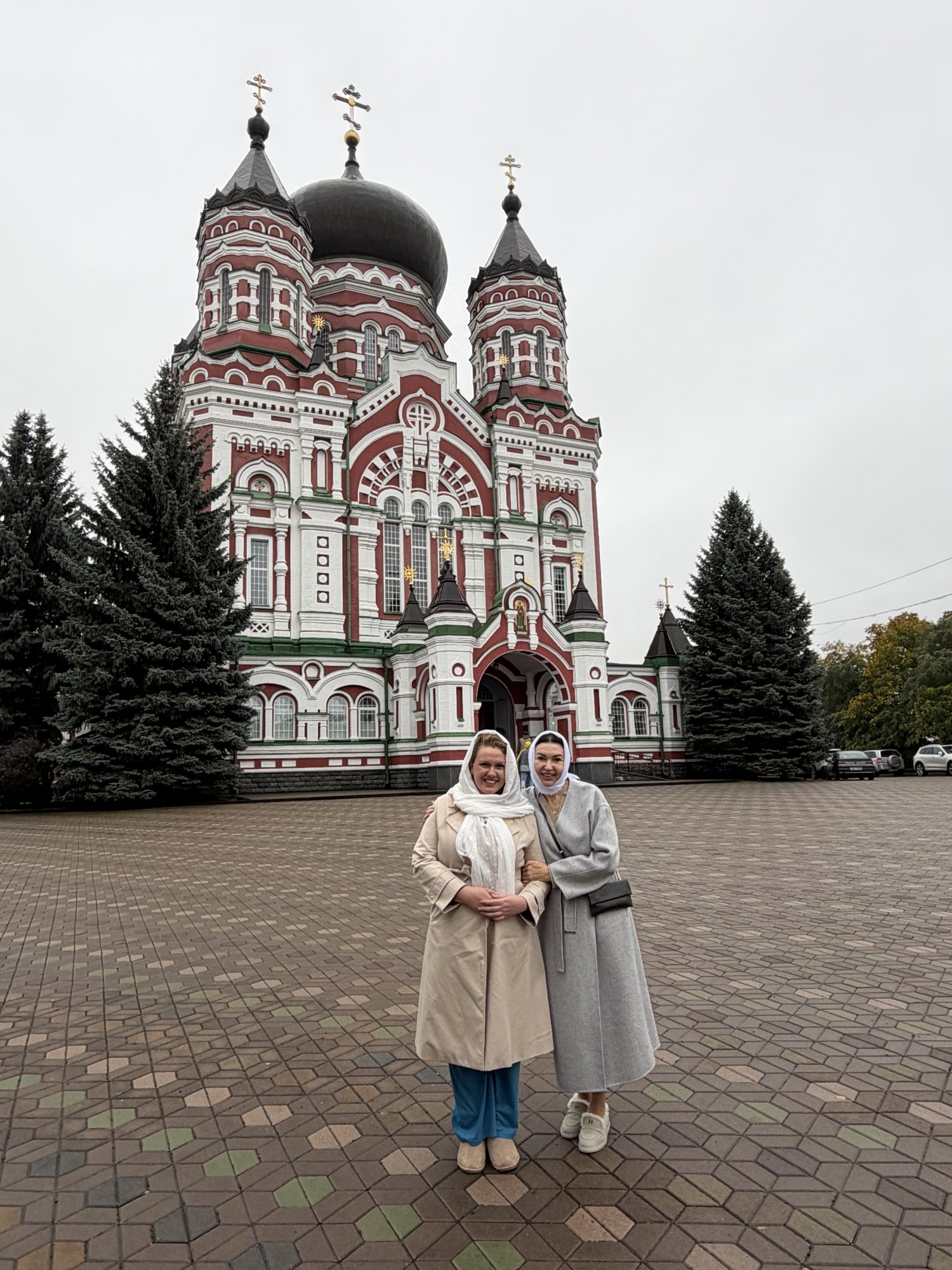
To be honest, the response made me chuckle — a welcome interruption in an otherwise frightening night. Before that, I’d been close to tears, listening to the explosions and wondering how much closer the next one would be.
Sometimes a White House attack can sting, just from the sheer weight of the office behind it.
But from a shelter in Kyiv, being lectured about Putin’s finer qualities was a little difficult to take seriously.
I’m not a negotiator, I’m a reporter. I ask questions — including when the White House would prefer applause.
And sitting here, listening to what Russia sends into this city at night, I have a fairly obvious one: What, exactly, is humanitarian about this?
That’s why I’m here. The words coming out of Washington deserve to be measured against what’s happening in the places affected by them.
Going independent means I can keep asking those questions. Your support means I can afford to be here to ask them.
Being self-employed means I’m not shackled by a company narrative or someone else’s fears that I might lose all-important “access.” If you value that reporting, please consider a paid subscription at correspondent.news.
I can’t promise quieter nights. But I’ll keep telling you what I hear.
Reader-supported reporting. Subscribe to keep the dispatches coming.
Become a subscriber Or join the free email list →