
Somewhere on those buses, they hoped, was Dad: Witnessing the Oleshky humanitarian mission
Liza and Dasha hadn’t seen their father in nearly three years. As the buses arrived, they still didn’t know whether he had come.
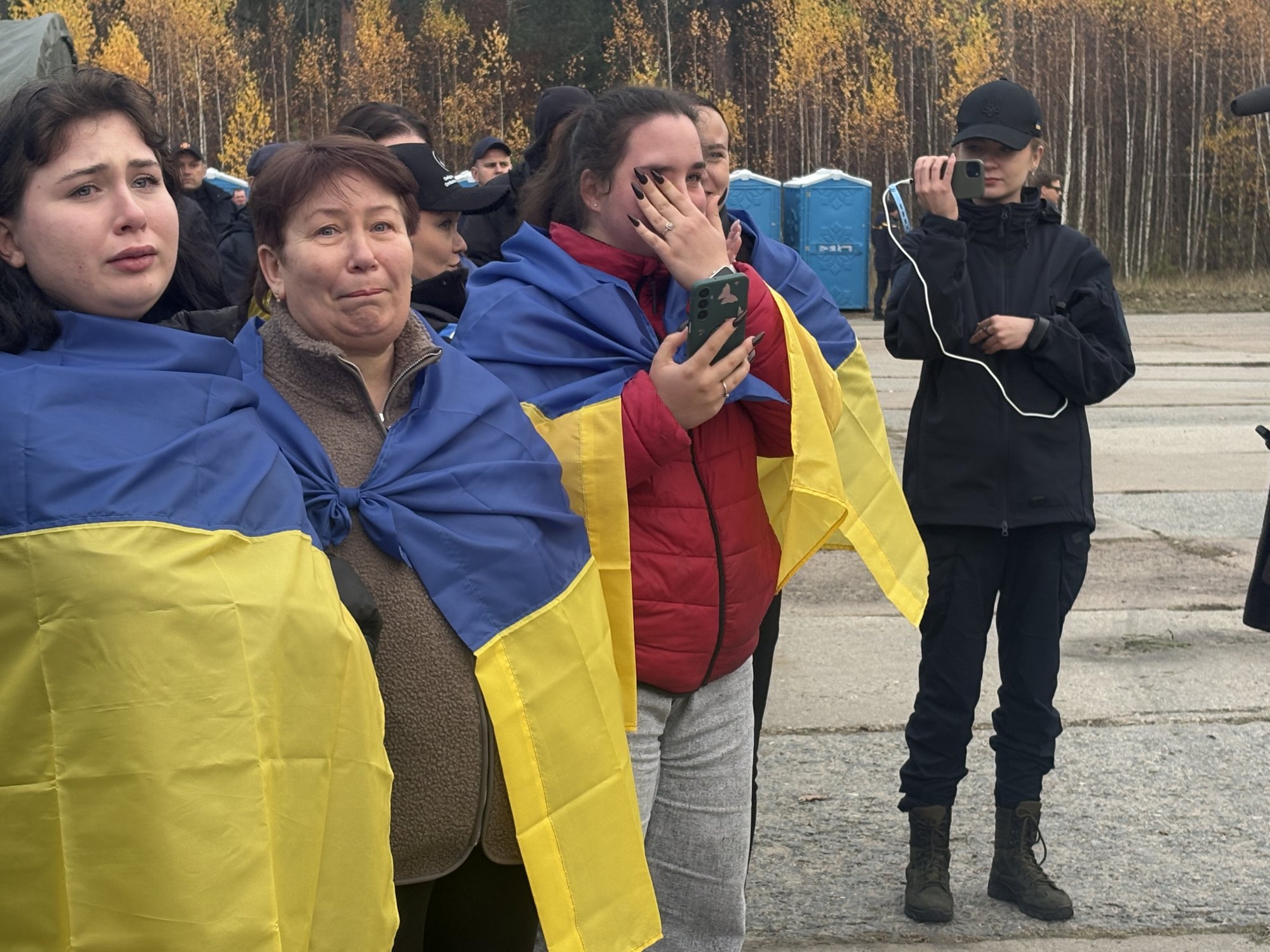
NORTHERN UKRAINE — The last time 19-year-old Liza Palii spoke to her father, he still hadn’t decided whether he would leave.
Four days later, she stood beside her mother and sister, waiting for 11 buses carrying evacuees from Russian-occupied Oleshky.
Somewhere behind those windows, she hoped, was Dad.
It had been nearly three years since Liza, her sister Dasha and their mother Zhanna escaped their hometown, leaving Mykhailo behind to care for the family’s animals. They had tried to convince him to come. But there were too many responsibilities — and he hadn’t given up hope that Ukrainian defenders would cross the Dnipro River and liberate the town Russia had occupied since 2022.
The women spent four days making their way on foot through Russian-occupied Ukraine. Eventually, they settled in Kyiv.
Mykhailo stayed.
Last week, news of an agreement to deliver aid and evacuate civilians from Oleshky gave the family a chance to hope again.
Maybe he could finally join them. Finally, they could all go home together.
But when they last reached him on Tuesday, he knew little about how the mission would work — or whether he would be part of it.
“We’re waiting for our father, but we don’t know if he came. Because when we last spoke to him on the 27th of this month, he didn’t know if he would stay or come,” Liza told The Correspondent.
But they came anyway.
The evacuation was made possible by a temporary ceasefire in the Kherson region, brokered with help from first lady Melania Trump. Roads were cleared of mines so a humanitarian convoy could enter Oleshky with supplies and bring people out.
It was the first joint relief operation of its kind in the four years and eight months of this terrible war. Residents told The Correspondent they survived on little more than a cup of rice or buckwheat a day and risked mine-strewn roads to find food and water.
Ukrainian forces had recently been able to deliver some food and supplies by drones, but the residents said oftentimes, Russian soldiers would follow and steal the humanitarian relief for themselves.
To reach Ukrainian-controlled territory, evacuees traveled through Russia and Belarus before crossing back into northern Ukraine. Ukrainian authorities withheld the final evacuation count and restricted route details to protect those left behind and future missions, according to The Associated Press.
For the Palii family, all those negotiations and arrangements came down to one question: Was Mykhailo on a bus?
From a distance, leaving Oleshky might seem an easy decision. Leave the hunger and danger. Go find your family.
But no matter how many evacuees I interview, there is almost always a solemnity to their escape.
Imagine leaving everything you’ve ever collected with little more than a suitcase. Your home, oftentimes your pets. The place where you raised your children and marked their heights on the wall.
Imagine holding out in hell for years for liberation, then having to leave before it comes.
Imagine having to trust the Russians occupying your town to let you go.
I asked the women how they felt: “happy,” “excited” and “nervous,” they said. I could tell it was a little more of the latter.
Sensing the tension, I tried a lighter question.
“What’s the first thing you want to do with him once you see him — aside from giving him a hug?”
“Take him to McDonald’s!” Liza cried.
We laughed together.
It was the first place she, her sister and their mother had gone after their own escape, she explained. Her father had never been.
“Never ever?” I asked.
“Never,” she said. “I had been in Kharkiv. My favorite is the cheeseburger.”
I told her the US president was a big fan, too.
It reminded me of stories of the USSR, when the Soviets so desperately wanted American pleasures as simple as blue jeans that were inaccessible during the Cold War.
For a moment, we were talking about cheeseburgers. A daughter wanted to take her father somewhere he had never been, to get him to try something she liked.
But first, they had to find out if he was on one of the buses. I silently prayed a decade of the rosary in my head that they would not be disappointed. I’ve seen too many tragic endings to stories here in Ukraine.
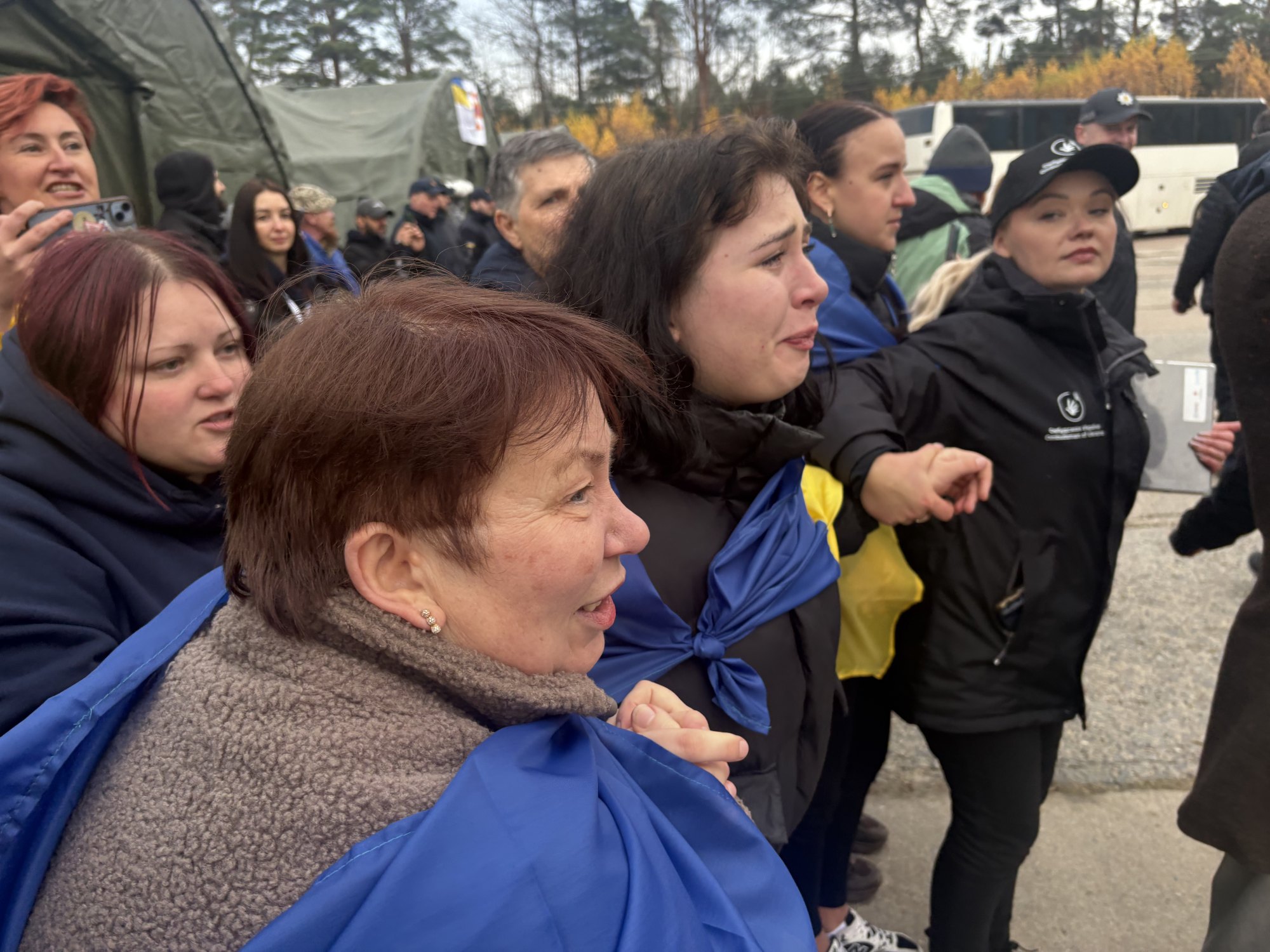
We talked a little longer. Dasha told me she liked tattooing designs and worked for the railway.
Then the organizers began lining up the waiting families outside, and the long line of white buses crept into the site.
I stood with the Palii women as they held each other’s hands, their knuckles white in the cold autumn air.
Minutes passed.
Buses drove by.
The women searched the windows, scanning the faces of people who had made it out of the town they had left so long ago.
Then Dasha screamed.
It was a sound unlike anything I had heard in real life. Frankly, it was bloodcurdling — almost like despair.
My stomach dropped. Had she learned her father wasn’t coming? I can’t speak much Ukrainian and I’d come (foolishly) without a translator due to budget restraints.
But then she ran after the bus — she had seen him.
For the first time since February 2024, her father was right there, on the other side of a window.
Caught up in her overwhelm, Dasha fell to the ground. Liza and their mother helped her up, then had to physically hold her back from running into the path of the buses to reach him.
They held each other tight and cried — their white knuckles exposed to the chilly autumn air.
He had come.
When the organizers finally gave the go-ahead, both sisters screamed, “PAPA!” over and over again like toddlers, and sprinted across the parking lot.
Mykhailo was the first one off his bus.
They clung to him instantly. Then their mother joined them, and the four of them stood holding one another.
For nearly three years, there had always been someone missing.
Now they could put their arms around him.
Their mother slipped a ring onto Mykhailo’s finger — his wedding ring.
She had worn it alongside her own since leaving Oleshky. It was safer with her, she had believed. They hadn’t known whether they would ever see each other again, and this was a piece of him she could carry with her.
Now she could give it back and hold him instead.
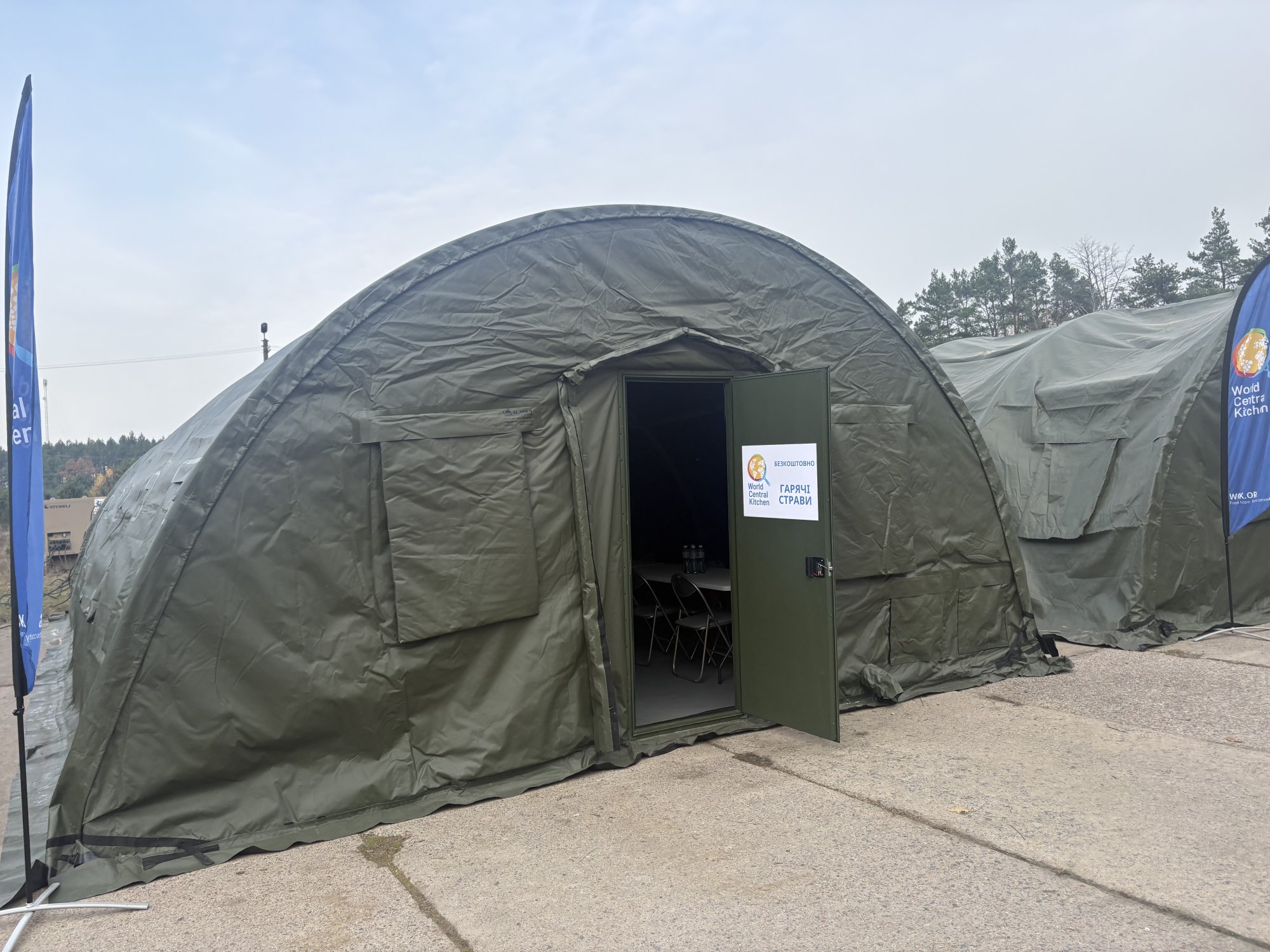
The family warmed up with a meal from World Central Kitchen and collected a blanket and coat from the Red Cross before taking Mykhailo home.
There would be time for McDonald’s.
Around them, other evacuees were beginning to work out what came next.
Most did not have relatives waiting at the site. Some had traveled with someone they knew. What particularly struck me were the elderly people who arrived alone.
I didn’t know who would sit beside them that night, or where they would begin again. A hot meal and a warm coat mattered. But there was so much more they had lost.
Throughout the day, I spoke with others elated to have escaped Russian occupation. They had brought what they could — and, in some cases, more than their own belongings.
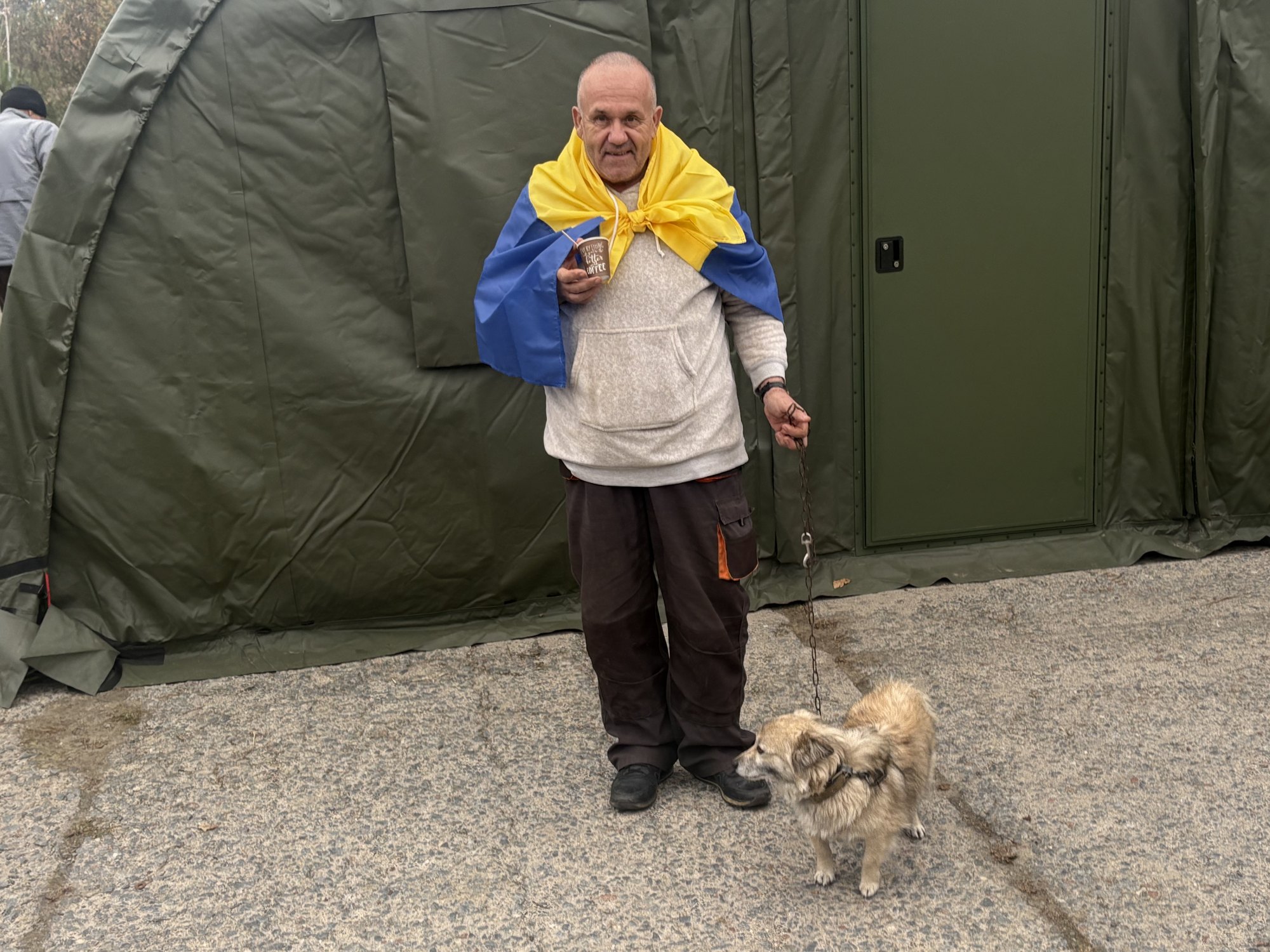
People from Oleshky had rescued stray cats and dogs along with their pets.
I streamed the animals’ arrival for anyone searching for news that a beloved companion had made it out. The Hachiko team had brought food and carriers.
Residents had said many of the animals had been surviving on grass alone, just like the people.
Even after everything, people had found room for hungry creatures.
Others stayed in Oleshky, but how many remains unclear. There were certain details that were not broadcast as part of an agreement with Russia — on the chance that the countries could pull off another humanitarian mission like this one.
Newsmax correspondent Alex Salvi reported that 11 buses carried evacuees toward Ukrainian-controlled territory and four went toward Russia.
Ukrainian and Russian officials said they would work toward further humanitarian missions. For families still separated, that meant another chance to wait for news.
For the Paliis, the waiting was finally over.
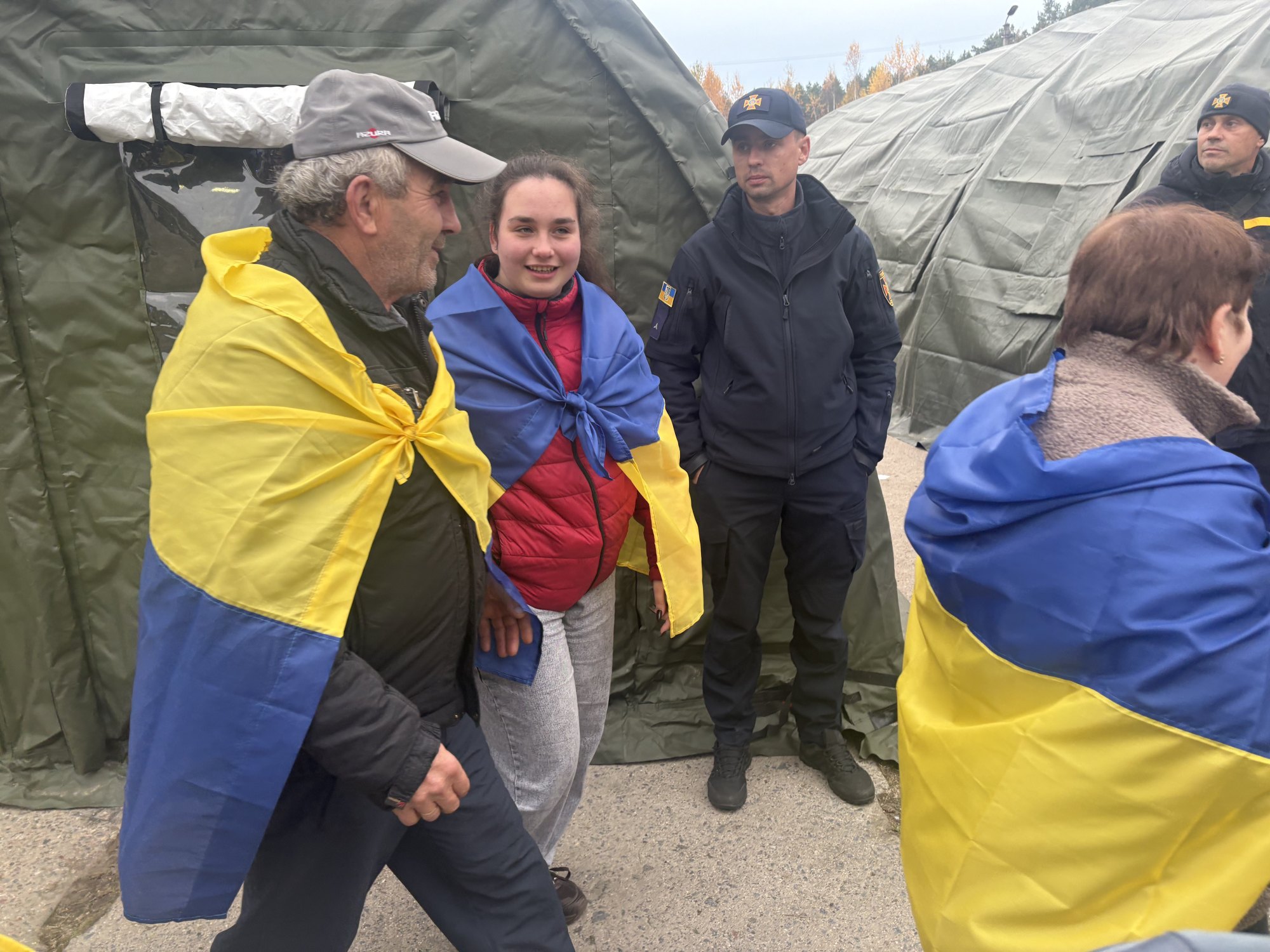
I headed back toward Kyiv after a long day of watching people find one another.
Along the road, Ukrainians had come out to welcome the evacuees for miles and miles. They didn’t know the people on the buses. They cheered them anyway.
For a few hours, I had watched this country welcome people back. They were total strangers — but fellow Ukrainians.
It reminded me of how Ukrainians line the streets and take a knee when a fallen soldier’s body is escorted for burial — a tradition that happens far too often here.
Not two minutes into the drive, my phone began buzzing with warnings of incoming Russian drones.
The war was still on. So were the families still waiting, and the people still trapped.
I thought of the relieved evacuees headed to Kyiv, just to be welcomed to the sounds of war.
But somewhere on the road home, Liza and Dasha had their father beside them.
And their mother no longer had to wear his ring.
Reader-supported reporting. Subscribe to keep the dispatches coming.
Become a subscriber Or join the free email list →