
EXCLUSIVE: Ukrainian lawmakers back sweeping new US alliance, say battlefield lessons could save American lives
Kyiv’s Myhailo Sokolov and Yurii Pavlenko are publicly backing a deeper partnership with Washington — pitching military technology, investment and shared interests as the foundation of UAUA.
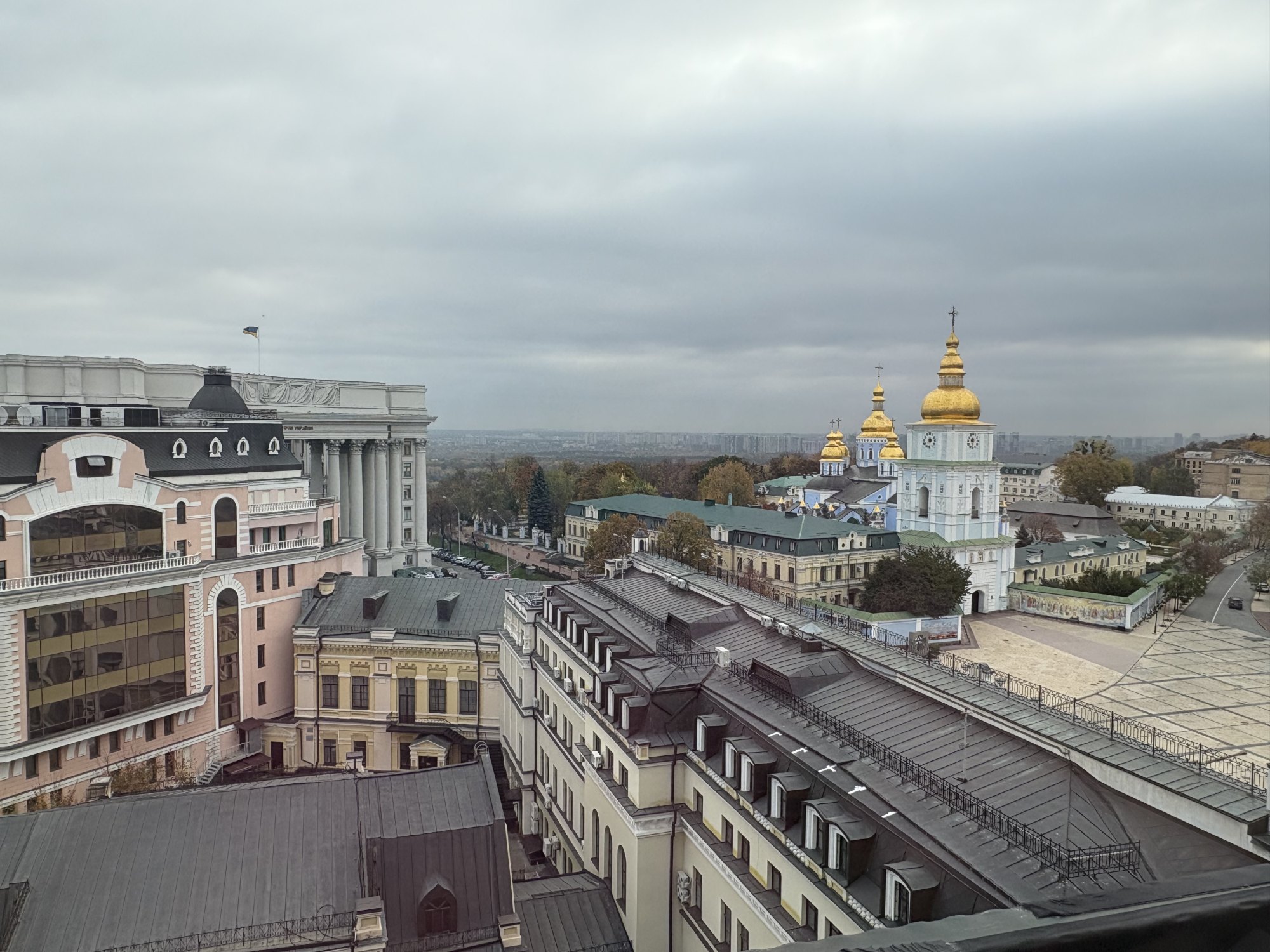
Some Ukrainian lawmakers are backing a sweeping alliance with the United States that would tie the countries together through military cooperation, American investment and access to Ukraine’s resources — arguing the battlefield lessons learned fighting Russia could help save American lives.
Ukrainian Member of Parliament Myhailo Sokolov threw his support behind the proposed Ultimate American-Ukrainian Alliance, or UAUA, in an interview with The Correspondent, saying the idea is drawing interest among lawmakers frustrated with the country’s long wait for a place in NATO and the European Union.
“I communicate in the corridors with various parties, both from the party in power and the opposition, and I see that this is arousing very great interest,” he said.
Fellow Verkhovna Rada representative Yurii Pavlenko also endorsed the idea in a separate interview, saying Kyiv should move more aggressively to build a partnership he said would preserve Ukraine’s sovereignty while drawing the countries closer both militarily and economically.
For Pavlenko — who recounted fighting alongside American volunteers in the current war — the relationship is deeply personal.
“For me, this is strategic partnership here in the heart,” he said, recalling literal “blood that was on my hands of citizens of America who defended my family, my home, and my country.”
“This is a very sharp turn,” Sokolov said. “It is well bold, but I am sure that many politicians can share this path.”
Their endorsements follow Ukrainian commander Denys Yaroslavsky’s pitch for a far-reaching US partnership that would include a joint military academy, broad access for American companies to Ukraine’s economy and, ultimately, a combined military.
Yaroslavsky said Ukrainian politicians had expressed support privately but were afraid to publicly advocate a change in Kyiv’s foreign policy.
But Sokolov and Pavlenko are now openly backing the concept, with Sokolov calling for an appeal to President Trump and Congress.
A narrow window with Trump
Yaroslavsky warned that Kyiv has a narrow window to interest Trump in the proposal before domestic political battles consume more of his attention.
“Actually, we have a maximum of a month and a half after the midterm elections,” he said. “It is we who are dragging out this time.”
That deadline reflects Yaroslavsky’s assessment of Trump’s political priorities.
Yaroslavsky said the proposal was presented to David Arakhamia, the parliamentary leader of Zelensky’s party, in January 2025, and that presidential aide Andriy Yermak knew about it.
“They know they support it in private conversations, and everyone is afraid to announce it,” he said.
Arakhamia — who recently visited the White House to award Melania Trump with Ukraine’s Order of Princess Olga for her efforts with the Oleshky humanitarian mission — did not respond to a request for comment.
Sokolov and Pavlenko’s public endorsements now give the idea identifiable supporters inside parliament.
“Ukraine itself must extend a hand to partnership with the United States,” Sokolov said.
The proposal remains a theoretical political pitch for now, but Sokolov said conversations with other politicians are growing.
Battlefield lessons for America
Sokolov’s case centered on what Ukraine could bring to the partnership after years of fighting Russia — including experience with drones, a defense industry adapting under fire and resources needed by American manufacturers.
He proposed a joint academy for drone warfare, along with training and technology exchanges, arguing that Ukraine’s battlefield experience would be invaluable to the US military.
“This can be an academy of UAV systems, joint training and joint use of the most modern technologies,” he said.
Yaroslavsky envisioned a broader academy combining Ukrainian battlefield knowledge with American technology, producing officers accustomed to serving alongside one another from the beginning of their careers.
“Imagine in five years the first Ukrainian American cadets, officers who have gone through the general academy, will graduate from school,” he said.
“These are the generals of the future who will understand that they are friends from early youth.”
Pavlenko argued that the case for cooperation extends to protecting American troops and civilians from the weapons Ukraine is confronting every day.
“We have today that which can save the life of an American citizen, an American soldier,” he said.
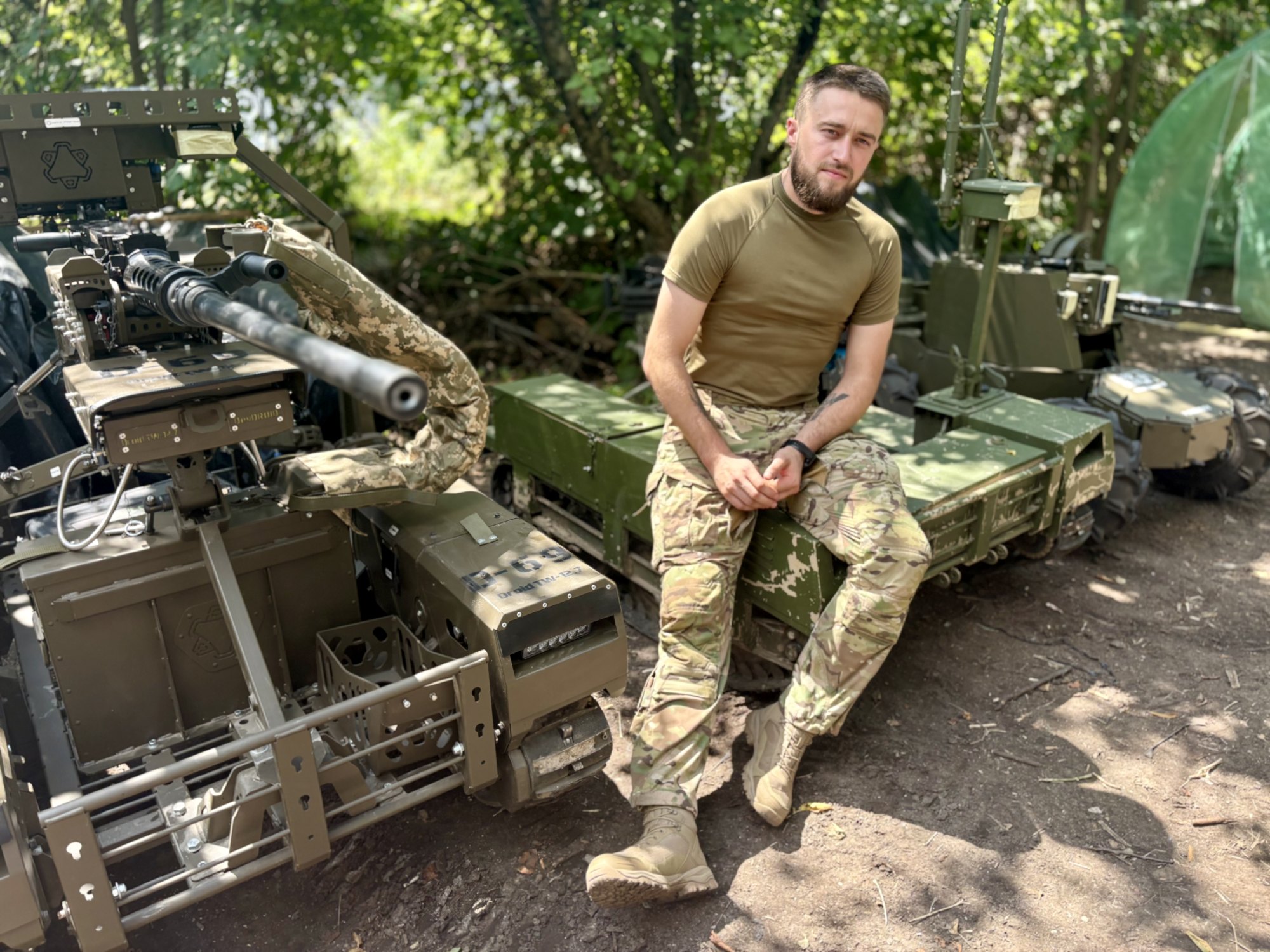
He described a battlefield where drones, robots and countermeasures are changing so quickly that troops must constantly rethink how they deploy, protect infrastructure and develop weapons.
“In order to survive, we need to think fast. We need to move fast,” he said.
For example, Pavlenko said the spread of unmanned systems is making underground infrastructure and counter-drone systems increasingly important for both military operations and civilian protection.
“Where if not in Ukraine today, to find counteraction to drone systems and robots,” he said.
He acknowledged that exchanges of knowledge and experience are already happening but argued that Ukraine should push harder to expand them.
“In my view, it is not intensive enough, and precisely not intensive enough from the Ukrainian side,” he said.

Beyond the minerals deal
For Sokolov, who was a rocket engineer before entering politics, cooperation with the Americans has a practical precedent. He recalled his former workplace’s involvement in Sea Launch, the international commercial rocket venture that included the American company, Boeing.
Ukraine’s aircraft, shipbuilding and rocket industries, he argued, offer Washington reasons to want a deeper relationship. The war has made its defense expertise more valuable still.
“We even became even more interesting for the United States as potential partners,” he said.
Sokolov also pointed to critical minerals as a way for Ukraine to help Washington reduce its dependence on China for materials used in electronics, military aircraft and space technology.
The two countries already have a framework for that kind of investment. Their April 2025 agreement established the US-Ukraine Reconstruction Investment Fund, which approved additional energy and critical minerals investments in October 2026, according to the US Treasury Department.
Sokolov wants those economic ties to become part of a larger strategic relationship, with investment and a US military presence helping deter another Russian attack.
“If there is an association with the United States, for Russia this will be a different player,” he said. “This will be a different map of the world.”
“This will no longer be a country that it wants to capture, but it will be a partner of the United States.”
He cited South Korea and Israel as examples of countries whose close relationships with Washington helped them develop in dangerous neighborhoods like Ukraine’s.
He also pointed to the Compacts of Free Association linking the US to three sovereign Pacific nations as a model worth examining.
Those existing agreements provide financial assistance and give Washington defense responsibilities. But experts caution the terms of any Ukrainian arrangement would have to be negotiated.
Sovereignty and a single army
Pavlenko emphasized that the formula for an alliance is still being debated. His goal, he said, is “the preservation precisely of Ukraine’s sovereignty, independence,” combined with “the maximum level of cooperation on all economic levels and directions.”
Yaroslavsky explicitly advocated a single army. Pavlenko emphasized sovereignty and left the military structure open, while Sokolov proposed joint training and raised the possibility of Ukrainians voluntarily joining the US Army. Their interviews establish support for a deeper alliance, with its military and political terms still unsettled.
Getting there would require sustained work by officials, specialists and business partners, the Ukrainian Armed Forces commander argued. He called for Ukrainian and US counterparts to work together daily on resources, energy, land and military technology — with delegations traveling between the countries to develop projects.
“There is a lack of sufficient political will from both sides,” he said, arguing that political noise can crowd out that work.
Sokolov acknowledged that Ukraine still wants NATO membership, a goal enshrined in its constitution, but expressed little confidence that the alliance would admit his country.
“We would very much like to get into NATO,” he said. “But our desire to get in there was not supported by NATO before the war, and after the war, even unlikely will be supported.”
Sokolov argued that a direct agreement with Washington could offer a clearer path forward and predicted it would appeal to Republicans and Democrats alike, particularly as Democrats take over Congress in January.
“The example of Israel shows us that the country needs bipartisan support,” he said. “We must do this first of all to President Trump and also to Congress.”
Taking the proposal to voters
At home, Sokolov suggested Ukrainians could give the proposal a public mandate through a referendum.
“Power belongs first of all to the people,” Sokolov said. “The people can decide this issue at a plebiscite, at a referendum.”
That would require resolving a substantial legal obstacle: Article 19 of Ukraine’s law on martial law prohibits national and local referendums as well as presidential, parliamentary and local elections while martial law is in force.
Still, Sokolov argued that Ukraine should find a way to hold elections during the war— pointing to U.S. elections during the Civil War even before modern technology and suggesting voting could take place over several days, with mail and online ballots helping troops participate.
He did not explain how that process would overcome the legal prohibition.
For now, both lawmakers want Ukraine’s leadership to make a more forceful case for the partnership.
Pavlenko said he and colleagues are beginning to promote the concept in Ukraine and to American politicians and citizens.
“Our peoples are wiser than our politicians,” he said.
Sokolov’s immediate demand is for Ukraine’s leadership to consider the proposal and take it to Washington.
“Only something powerful — something different from what is happening now — will be able to change the entire map,” he said.
“The time has come.”
Reader-supported reporting. Subscribe to keep the dispatches coming.
Become a subscriber Or join the free email list →