
A pitch for Trump to take on Putin: One army, a sprawling business pact and six weeks to act
Denys Yaroslavsky says Kyiv should offer Washington a military alliance and access to its economy while Trump is still looking for a deal to end the war.
KYIV — A Ukrainian commander has a pitch for President Trump: Open Ukraine’s economy to American companies, put US and Ukrainian troops in schools together and give Washington a stake in stopping Vladimir Putin from coming back for more.
Speaking with The Correspondent in Kyiv last week, Denys Yaroslavsky said he thinks Ukraine has about six weeks to get Trump’s attention.
“Actually, we have a maximum of a month and a half after the midterm elections,” Yaroslavsky said.
After that, he said, Trump will be consumed by his own political priorities and the opening for a deal could close, he fears.
Yaroslavsky called the proposal the Ultimate American-Ukrainian Alliance, or UAUA.
The pitch is that Ukraine has something Moscow can’t sell Trump: a military that has spent years learning how to fight Russia and is willing to share what it knows.

The idea of UAUA has been circulating around certain circles in Ukrainian politics for years, and Yaroslavsky said it comes from the same line of thinking that did the US-Ukraine mineral deal: understand the transactional nature of the Trump presidency, and cater to it.
“The first rule of a banker is to protect your investments as soon as American trillions of dollars enter business and investment here,” Yaroslavsky explained. “America will be interested in defending Ukraine like itself.”
The first step would be a joint military academy where Ukrainians would bring their battlefield experience and American companies would bring their technology. US and Ukrainian cadets would train side by side. Some of them, he hoped, would go on to command a combined force.
“Imagine in five years the first Ukrainian American cadets, officers who have gone through the general academy, will graduate from school,” he said. “These are the generals of the future who will understand that they are friends from early youth.”
The business side would go well beyond the minerals deal Washington and Kyiv signed in April 2025. That agreement created a joint reconstruction fund, which approved additional investments in Ukrainian energy and critical minerals in October.
Yaroslavsky wants Kyiv to open every sector of its economy to US companies. His bet is that the more American businesses have on the ground in Ukraine, the more Washington has to lose if Russia attacks again.
Yaroslavsky pointed to the Compacts of Free Association as a starting point. Under those agreements, the US provides financial assistance and takes on defense responsibilities for three sovereign Pacific nations — Palau, the Marshall Islands and the Federated States of Micronesia.
His proposal goes further, envisioning a single army and closer ties between the countries’ education and health care systems.
He also pushed for Kyiv to confront a question some in the Ukrainian government would rather leave open: What if NATO membership never comes?
“We are a proud nation that actually should not go where they are not waiting for us,” he said.
Yaroslavsky made a cultural pitch, too. He argued that Ukraine’s Christian identity would appeal to Trump’s MAGA base and said he feared adopting European migration rules — as they would have to do upon accession to the EU — would change his country.
He also acknowledged that a US pact would leave a painful issue unresolved: The territory Russia occupies would still have to be dealt with.
Yaroslavsky claimed the plan was shown to David Arakhamia, the parliamentary leader of Zelensky’s party, in January 2025.
Arakhamia did not immediately respond to a request for comment.
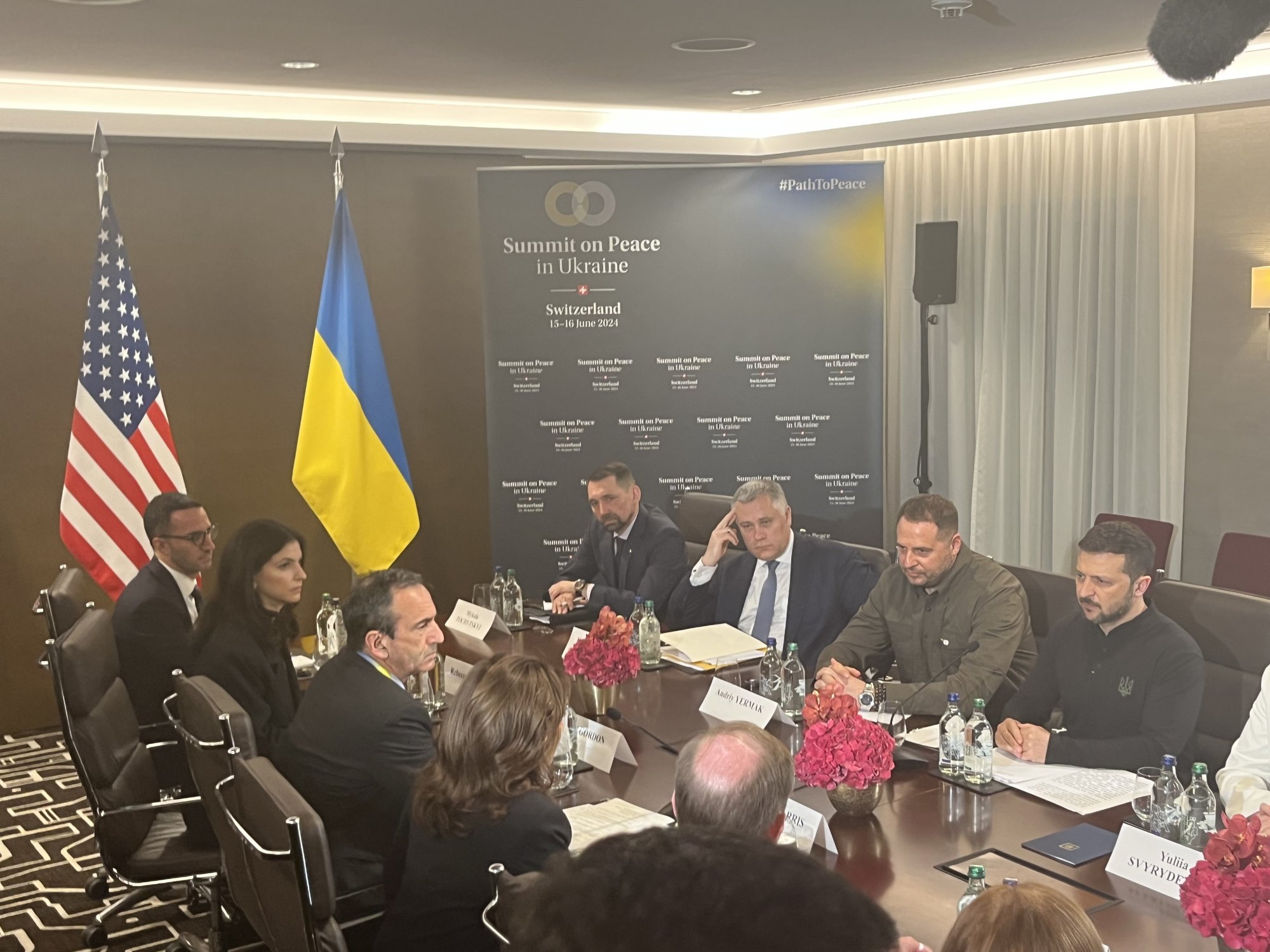
But Yaroslavsky said some Ukrainian officials have since backed the idea privately but are reluctant to go public because it runs against Kyiv’s push to integrate with Europe.
The Correspondent spoke with two current members of Parliament — Mykhailo Sokolov and Yuriy Pavlenko — who supported the idea. Their interviews are forthcoming in this series.
Yaroslavsky described the relationship with Washington as being at one of its lowest points, with distrust running deeper than it did after Trump and Zelensky’s Oval Office blowup.
He argued that Moscow has exploited that distrust and that more public sparring between the two presidents only makes it harder for Ukraine to get what it needs.
His immediate asks are smaller than a combined army. Get ambassadors in place, get the two militaries talking more and put a proposal in front of Trump while he’s still looking for a way to end the war.
“It is we who are dragging out this time,” he said.
Reader-supported reporting. Subscribe to keep the dispatches coming.
Become a subscriber Or join the free email list →